What Is the Best Rajasthan Itinerary Starting from Delhi?
If you are planning a holiday from Delhi and want to experience royal palaces, magnificent forts, colorful markets, traditional food, and beautiful lakes, a well-planned Rajasthan itinerary is an excellent choice. The state is large, so trying to cover every destination in a short trip can leave you spending more time on highways than enjoying the sights. A smarter approach is to follow a route that connects the major attractions naturally, allowing you to experience different sides of the region without constantly backtracking.
For most travelers, the ideal route from Delhi is Delhi → Jaipur → Jodhpur → Udaipur → Delhi. This circuit works particularly well for a five- to seven-day vacation because each destination offers something distinctly different. Jaipur introduces you to grand forts and royal architecture, Jodhpur brings dramatic blue streets and the enormous Mehrangarh Fort, while Udaipur slows the pace with serene lakes and romantic palace views. You can also extend the journey by adding Pushkar, Jaisalmer, or Ranthambore if you have more time.
Why Start Your Trip from Delhi?
Delhi is one of the most convenient starting points for a trip to northern India. It has extensive road, rail, and air connections, making it easy for travelers from different parts of India and abroad to begin their journey. Jaipur, the first major stop on this route, is roughly 260 to 270 kilometers from Delhi by road, so it can usually be reached in a few hours depending on traffic, road conditions, and your exact starting point.
Starting with Jaipur also makes geographical sense. Rather than traveling deep into the region and then returning along the same route, you gradually move southwest toward Jodhpur and then southeast toward Udaipur. From Udaipur, you can fly back to Delhi or continue your journey by road or train, depending on your schedule and budget.
The biggest advantage of this route is variety. Imagine your holiday as a three-act story: Jaipur is the royal opening, Jodhpur is the dramatic middle, and Udaipur is the peaceful finale. Each city has a different atmosphere, which keeps the trip interesting and prevents the itinerary from feeling repetitive.
How Many Days Do You Need?
A 5-day trip is enough for a quick introduction, but seven days gives you a much more relaxed experience. If you have only five days, avoid adding too many destinations. Travel fatigue can quickly turn an exciting vacation into a checklist exercise, particularly when several long road journeys are included.
A practical five-day itinerary can be planned as follows:
| Day |
Route |
Main Experiences |
| Day 1 |
Delhi to Jaipur |
City Palace and local markets |
| Day 2 |
Jaipur |
Amber Fort, Hawa Mahal and Jantar Mantar |
| Day 3 |
Jaipur to Jodhpur |
Mehrangarh Fort and Blue City |
| Day 4 |
Jodhpur to Udaipur |
Scenic road journey and Udaipur evening |
| Day 5 |
Udaipur |
City Palace, Lake Pichola and return journey |
For seven days, you can add Pushkar between Jaipur and Jodhpur or spend an additional day in Udaipur. Travelers interested in wildlife can consider adding Ranthambore, although doing so changes the route and requires additional travel time. If you have eight to ten days, you can create a more extensive itinerary by including Jaisalmer or another destination without making every day feel rushed.
Day 1: Delhi to Jaipur
Begin your journey early from Delhi. Driving gives you flexibility, particularly if you are traveling with family or a small group. You can stop along the way for breakfast or refreshments and arrive in Jaipur with enough time to explore part of the city. Starting early is particularly useful because Delhi traffic can affect your departure time, and arriving in Jaipur before evening gives you the opportunity to enjoy your first attractions at a comfortable pace.
Jaipur is popularly known as the Pink City, and its distinctive architecture immediately gives the impression that you have entered a different world. The old city is filled with historic buildings, busy bazaars, traditional handicraft shops, and restaurants serving everything from dal baati churma to kachori. The combination of colorful streets and historic architecture makes Jaipur an excellent introduction to the region.
After checking into your hotel, keep your first day relatively easy. Visit City Palace if you arrive early enough, then explore the surrounding markets. The areas around Johari Bazaar and Bapu Bazaar are popular for textiles, jewelry, handicrafts, souvenirs, and traditional clothing. If you enjoy photography, the late afternoon can be a good time to explore the old city's streets and architectural details.
End the evening with a relaxed dinner rather than attempting to visit every attraction. A good first day should build excitement for the next morning, not leave you exhausted. Try a traditional local meal and get a good night's sleep before beginning your main sightseeing schedule.
Day 2: Explore Jaipur
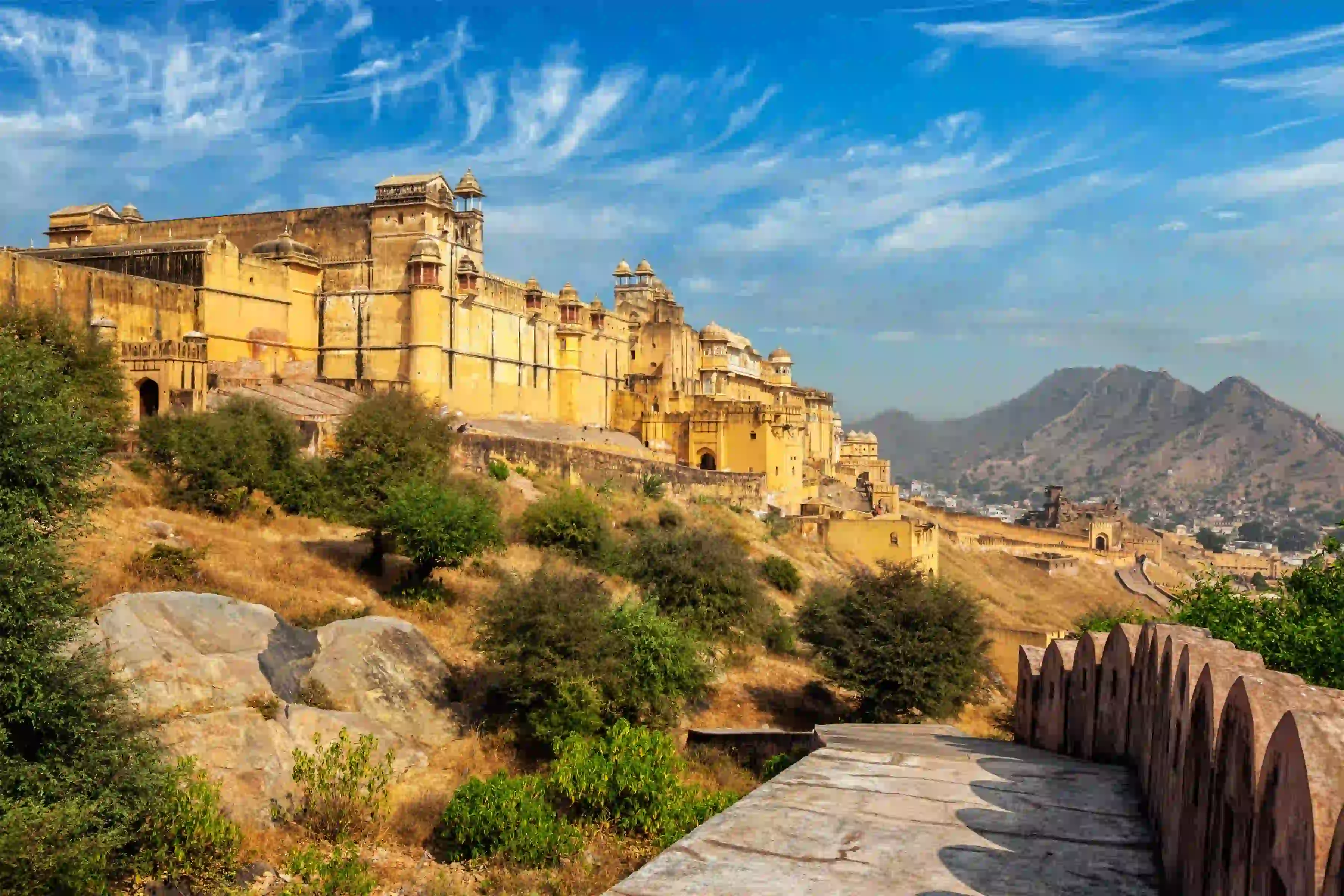
Start your second day with Amber Fort, one of Jaipur's most impressive historic attractions. Located on a hill outside the central city, the fort combines imposing defensive structures with detailed courtyards, decorative halls, gateways, and views of the surrounding landscape. Give yourself enough time here because rushing through the complex can mean missing some of its architectural details.
After Amber Fort, you can visit Jal Mahal, the palace appearing to float in Man Sagar Lake. Although access to the palace itself is restricted, the lakeside viewpoint is a popular stop for photographs. The location can be conveniently included while traveling between Amber Fort and the city center.
Continue toward Hawa Mahal, one of Jaipur's most recognizable landmarks. Its honeycomb-like facade contains numerous small windows designed to allow royal women to observe activity outside while maintaining privacy. The building is particularly photogenic from the street opposite it, where you can get a clear view of the famous facade.
If you enjoy astronomy and architecture, add Jantar Mantar to your afternoon. The historic observatory contains large astronomical instruments that demonstrate the sophistication of pre-modern astronomical calculations. In the evening, explore Jaipur's food scene and try local specialties such as dal baati churma, ghewar, pyaaz kachori, and lassi.
Day 3: Jaipur to Jodhpur
Leave Jaipur after breakfast and travel toward Jodhpur. The road journey takes several hours, so an early departure is useful. If your schedule permits, you can make a short stop at Pushkar, a town known for its sacred lake, temples, colorful streets, and lively market. Pushkar works particularly well as an optional stop because it adds a different cultural experience without requiring a major detour for many travelers following this route.
You can walk around Pushkar Lake, explore the market, and visit the famous Brahma Temple before continuing toward Jodhpur. Keep the stop relatively short if you want to reach Jodhpur with enough daylight for sightseeing. Travelers with more time can spend an entire night in Pushkar instead of treating it as a roadside stop.
Once you reach Jodhpur, check into your accommodation and head toward Mehrangarh Fort if you arrive with sufficient daylight. The fort rises dramatically above the city and is one of the defining landmarks of the region. Its massive walls and elevated position create an unforgettable first impression.
Standing near the fort and looking over the old city, you can see why Jodhpur earned its famous nickname, the Blue City. Rows of blue-painted houses spread across the landscape beneath the massive fort walls, creating one of the most memorable urban views in northern India. Spend the evening exploring the old city or enjoying dinner at a rooftop restaurant.
Day 4: Discover Jodhpur and Travel to Udaipur
If you did not have enough time for Mehrangarh Fort on the previous day, make it your first priority. The complex contains courtyards, palaces, galleries, and historic collections that reveal the lifestyle and military history of the former royal family. The scale of the fort means that it is worth allowing several hours rather than trying to see it quickly.
You can also visit Jaswant Thada, a beautiful marble memorial located close to the fort. Its quieter surroundings make it a pleasant contrast to the massive stone architecture of Mehrangarh. The white marble structure and peaceful setting also make it a worthwhile stop for photographers.
Before leaving Jodhpur, spend some time around the old market area near Clock Tower and Sardar Market. This is a good place to experience everyday city life and browse for spices, handicrafts, fabrics, snacks, and souvenirs. If you enjoy street food, this is also an opportunity to sample some of the city's famous snacks.
Then begin the journey toward Udaipur. This is one of the longer travel stretches on the itinerary, so do not overload the day with additional sightseeing. Udaipur feels dramatically different when you arrive. Where Jaipur is energetic and Jodhpur is rugged, Udaipur feels calmer and more romantic, with lakes, hills, whitewashed buildings, and palace architecture creating a distinctive atmosphere.
Day 5: Explore Udaipur
Start your final sightseeing day with City Palace, a vast complex overlooking Lake Pichola. Its courtyards, balconies, decorative rooms, terraces, and historic exhibits provide a fascinating look into the region's royal history. Because the palace complex is extensive, give yourself enough time to explore without constantly watching the clock.
After exploring the palace, take time to walk through the old city. Small lanes around the lake are filled with cafés, handicraft stores, art shops, and restaurants. Rather than rushing between attractions, Udaipur rewards travelers who slow down and appreciate the city's atmosphere.
A boat ride on Lake Pichola is one of the classic experiences to include. The views of the surrounding hills and palace buildings from the water are particularly attractive around sunset. If your schedule permits, finish your trip with dinner at a rooftop restaurant overlooking the lake.
If you need to return to Delhi immediately, check flight and train schedules according to your preferred travel style. Flying is generally the most time-efficient option, while an overnight train can be useful for travelers who want to save the cost of a hotel night.
A Better 7-Day Delhi to Rajasthan Itinerary
If you can spare a week, avoid simply adding more attractions to the existing five-day schedule. Instead, add breathing room. One option is to spend three nights in Jaipur, allowing you to visit Amber Fort, the old city, markets, museums, and nearby attractions without rushing. You could then travel to Pushkar and spend a night there before continuing to Jodhpur.
Another option is to keep Jaipur and Jodhpur as planned and spend two full days in Udaipur. This is ideal if you prefer architecture, food, photography, lakeside walks, and relaxed evenings rather than constantly changing hotels. Having an additional day also gives you more flexibility if weather, traffic, or transportation delays affect your schedule.
For adventure-oriented travelers, Jaisalmer is another possibility. Its desert landscapes and sandstone architecture are completely different from Jaipur and Udaipur. However, adding Jaisalmer to a one-week trip can create substantial travel time, so it is better suited to an itinerary of eight to ten days.
Best Time to Take This Trip
The cooler months, particularly October through March, are generally the most comfortable period for sightseeing. Daytime conditions are typically more pleasant for walking around forts and historic neighborhoods, while evenings can be cool. Winter is also a popular period for tourism, so accommodation and transportation can become more competitive around holidays and major festivals.
The summer months can be extremely hot, especially when exploring exposed forts and outdoor monuments during the afternoon. If you travel during this season, start sightseeing early, take regular breaks, stay hydrated, and avoid planning too many outdoor activities around midday. Comfortable clothing and sun protection can make a substantial difference to your experience.
The monsoon period can bring a different character to the landscape. Udaipur in particular can look beautiful when surrounding hills and lakes have more greenery, although rainfall may affect road travel. Before beginning a road journey, it is sensible to check the weather and allow some flexibility in your schedule.
How to Travel Between the Cities
You have three main choices: car, train, or a combination of flights and ground transportation. A private car is usually the easiest choice for a multi-city itinerary because you can control departure times and make stops along the way. It can also be convenient for families carrying luggage between several hotels.
Trains can be excellent for selected routes and are worth considering if you prefer India's railway experience. They can also help reduce the fatigue associated with long road journeys. Flights become particularly useful when returning from Udaipur to Delhi because you can save considerable travel time.
Your best option ultimately depends on whether you value flexibility, comfort, budget, or speed. Families and small groups may find a private vehicle particularly convenient, while solo travelers and couples may prefer trains for selected journeys.
Where Should You Stay?
Location matters almost as much as the hotel itself. In Jaipur, staying near the old city can make sightseeing and shopping easier, while areas outside the center can offer larger hotels and quieter surroundings. Choose an area that gives you reasonable access to the attractions you want to visit rather than selecting accommodation based solely on price.
In Jodhpur, look for accommodation with convenient access to Mehrangarh Fort and the old city. Some heritage properties also provide rooftop views of the fort and blue houses, giving you an experience beyond simply having a place to sleep.
Udaipur offers everything from affordable guesthouses to luxury heritage hotels. For a memorable stay, choose accommodation near Lake Pichola if your budget allows. Waking up to a lake and palace view can become one of the highlights of the entire trip.
Rather than choosing accommodation purely based on star rating, consider location, parking, breakfast, air conditioning, reviews, and access to major attractions. These practical details can have a much bigger impact on a multi-city holiday than a hotel's rating alone.
What Should You Eat?
Food is an important part of any trip through the region. Each city has its own collection of specialties, and local restaurants can introduce you to flavors that you may not encounter at home. Trying regional dishes is an easy way to make your trip more memorable.
In Jaipur, try pyaaz kachori, ghewar, dal baati churma, and traditional thali meals. Jodhpur is famous for snacks such as mirchi bada and mawa kachori, while Udaipur has a wide range of traditional vegetarian restaurants and modern cafés.
If you are sensitive to spicy food, tell the restaurant staff before ordering. Carrying water and keeping meals reasonably light during long road journeys is also a good idea. A leisurely local meal can be part of the cultural experience itself rather than something you simply squeeze between sightseeing stops.
Practical Tips for Your Delhi Trip
The biggest mistake travelers make on a multi-city itinerary is trying to see too much each day. Historic attractions are not places you can simply tick off a list; many are large complexes requiring several hours to explore properly. Keep your mornings for major monuments, afternoons for indoor attractions or relaxed meals, and evenings for markets, cafés, walks, or sunset views.
Carry comfortable walking shoes because forts and old-city streets can involve uneven surfaces and stairs. Sunscreen, sunglasses, a reusable water bottle, and lightweight clothing are useful for much of the year. If you are traveling during cooler months, pack a light jacket for early mornings and evenings.
It is also sensible to keep some flexibility in your schedule. Traffic, weather, delayed trains, and unexpected discoveries can all change your plans. A good itinerary should be a framework, not a prison. Leaving a little free time can actually make your holiday feel more enjoyable.
Why This Route Works So Well
The greatest strength of this itinerary is its balance. You get historic architecture in Jaipur, imposing fort heritage in Jodhpur, and lakeside beauty in Udaipur, while the journey generally moves forward rather than repeatedly retracing your route.
You also experience several different landscapes and urban personalities within a single vacation. Jaipur feels grand and colorful, Jodhpur has a stronger desert-city character, and Udaipur provides a softer, more relaxed atmosphere. For first-time visitors, this combination offers an excellent introduction without requiring an extremely long holiday.
If you have more time, destinations such as Pushkar, Jaisalmer, Ranthambore, Bikaner, or Mount Abu can be incorporated according to your interests. The secret is choosing depth over quantity. Seeing three destinations properly is usually more rewarding than seeing seven cities for only a few hours each.
Conclusion
The best itinerary starting from Delhi is not necessarily the one with the largest number of destinations. A route such as Delhi → Jaipur → Jodhpur → Udaipur → Delhi provides a strong balance of culture, history, architecture, food, scenery, and manageable travel. With five days, you can experience the essential highlights; with seven days, you can slow down and add Pushkar or extra time in Udaipur.
Plan your major sightseeing in the morning, leave room for spontaneous discoveries, and choose transportation according to your budget and comfort level. Most importantly, do not turn your holiday into a race. The magic of this journey lies not only inside famous forts and palaces but also in the markets, meals, roadside views, conversations, and unexpected moments between destinations.
Frequently Asked Questions
1. What is the best route from Delhi for a first trip?
For a first-time visitor, Delhi → Jaipur → Jodhpur → Udaipur → Delhi is one of the most practical circuits. It combines three major cities with very different experiences and avoids unnecessary backtracking.
2. Is five days enough for the trip?
Yes, five days can cover the major highlights, but the schedule will be relatively busy. Seven days is preferable if you want more relaxed sightseeing and time for shopping, local food, and leisurely evenings.
3. Should I travel by car or train?
A private car offers greater flexibility and makes it easier to visit places between cities. Trains can be more economical and comfortable for certain routes, so a combination of both can work well.
4. Can I add Pushkar to this itinerary?
Yes. Pushkar is a convenient addition between Jaipur and Jodhpur. With an extra day, you can explore its lake, temples, markets, and distinctive atmosphere without making the overall trip excessively rushed.
5. Which city should I spend the most time in?
For a first visit, Jaipur deserves at least two days because of its numerous attractions. Udaipur is an excellent choice for additional leisure time if you prefer lakes, scenic views, cafés, and a slower travel experience.