
How Many Days Are Enough for a Delhi Agra Jaipur Tour?
Planning a trip to India’s famous Golden Triangle is exciting, but one question comes up almost immediately: how many days are enough for a Delhi Agra Jaipur Tour? The short answer is that 5 days and 4 nights is ideal for most travelers. This gives you enough time to experience the major attractions of Delhi, admire the Taj Mahal in Agra, and explore the forts, palaces, markets, and colorful streets of Jaipur without making the entire holiday feel like a race. Of course, your ideal duration depends on your interests, travel style, budget, and available vacation time. Travelers with only three days can see the highlights, while those with six or seven days can enjoy a considerably slower and more immersive experience. The Golden Triangle is not just about visiting famous monuments and taking photographs; it is about experiencing three fascinating destinations that represent different periods and personalities of North India. With a sensible itinerary, you can combine sightseeing with local food, shopping, cultural experiences, and enough downtime to actually enjoy your journey.
Why Visit Delhi, Agra and Jaipur Together?
Delhi, Agra, and Jaipur make such a popular route because each destination offers something distinctly different. Delhi introduces travelers to a remarkable combination of ancient history, Mughal architecture, colonial-era landmarks, modern neighborhoods, and vibrant street life. Agra is synonymous with the Taj Mahal, but the city also has an impressive historical legacy that includes Agra Fort and other Mughal monuments. Jaipur, meanwhile, brings you into the world of Rajasthan, with magnificent forts, royal residences, colorful bazaars, traditional crafts, and distinctive architecture. Traveling between these cities creates a natural journey through Indian history rather than leaving you in one location for your entire vacation. It is almost like reading three chapters of a history book, except the buildings, markets, food, and people are right in front of you.
For international visitors, the route is particularly convenient because it can often be completed without taking domestic flights between every destination. You can travel by private car, train, or a combination of transportation depending on your preferences. A private vehicle gives you greater flexibility, especially if you want to stop at places such as Fatehpur Sikri or take photographs along the way. Trains can be useful when you want to reduce road travel, while organized tours are convenient for travelers who prefer someone else to handle hotels, transportation, guides, and sightseeing arrangements. The most important thing is to avoid assuming that distance on a map automatically translates into travel time. Indian city traffic, sightseeing schedules, road conditions, and seasonal conditions can all affect your day.
Is 3 Days Enough for the Golden Triangle?
If your vacation is extremely short, a 3-day Golden Triangle itinerary can cover the principal attractions, but it will be fast-paced. You may spend the first day exploring selected highlights of Delhi, travel to Agra, visit the Taj Mahal the following morning, and then continue toward Jaipur. The final day can be dedicated to Jaipur before departure. This approach works best for experienced travelers who are comfortable with early mornings, limited free time, and relatively long travel days. It is not the best choice if your goal is to relax, explore neighborhoods slowly, enjoy leisurely meals, or spend significant time at individual monuments.
The biggest disadvantage of a three-day itinerary is that unexpected delays have very little impact room. If your journey takes longer than expected, you may have to remove something from the sightseeing schedule. You also have less opportunity to recover from a tiring travel day. The Golden Triangle contains numerous attractions, and trying to see all of them in such a short period can make the experience feel more like checking items off a list. If three days are all you have, prioritize the Taj Mahal, Agra Fort, Amber Fort, Hawa Mahal, City Palace, and a few of Delhi’s most important landmarks rather than attempting to see everything.
Why 5 Days Is the Best Choice
For the majority of travelers, five days is the sweet spot. It provides a practical balance between sightseeing and relaxation, while still fitting comfortably into a typical short holiday. You can spend one or two days in Delhi, one day in Agra, and two days around Jaipur, depending on your arrival and departure times. The schedule allows you to see the most important landmarks without constantly watching the clock. More importantly, you can enjoy an evening in each destination instead of arriving late and immediately going to sleep.
A five-day itinerary also provides a little flexibility. If traffic slows your journey or you spend longer than expected at a monument, you are less likely to lose an important experience. You can also include an attraction such as Fatehpur Sikri between Agra and Jaipur if your schedule permits. Families and couples particularly benefit from this pace because there is room for proper meals, hotel breaks, shopping, and photography. Instead of feeling like you are chasing the next destination, you have time to absorb what you are seeing.
Is 6 or 7 Days Better?
If you have six or seven days available, the Golden Triangle becomes even more enjoyable. The additional time allows you to slow down in Delhi or Jaipur, depending on your interests. Delhi alone can occupy several days if you want to explore Old Delhi, museums, historical monuments, markets, gardens, religious sites, and contemporary food neighborhoods. Jaipur also rewards slow exploration because its appeal extends beyond its most famous landmarks. You can spend additional time shopping for handicrafts, discovering local restaurants, visiting lesser-known attractions, or enjoying cultural activities.
Seven days can also be a good choice if you are traveling with children or older family members. Rather than spending every morning and afternoon sightseeing, you can build breaks into your schedule. This makes the trip more comfortable and reduces travel fatigue. A longer itinerary can also include experiences such as a traditional cooking class, a local market walk, a cultural performance, or a countryside excursion. The extra days essentially transform the trip from a monument-focused tour into a broader Indian travel experience.
Recommended 5-Day Itinerary
A well-organized Delhi Agra Jaipur Tour generally follows the route from Delhi to Agra and then Jaipur. This direction makes geographical sense and avoids unnecessary backtracking. You can complete the journey by private car for maximum flexibility or combine road travel with trains where convenient. Below is a practical way to structure five days.
Day 1: Discover Delhi
Begin your trip by exploring some of Delhi’s major attractions. Depending on your arrival time, you can visit India Gate, Humayun’s Tomb, Qutub Minar, the Red Fort, Jama Masjid, or other landmarks that match your interests. You do not need to visit every attraction on the first day. Instead, choose sites that are relatively close together so you spend more time sightseeing and less time sitting in traffic.
Old Delhi is particularly worthwhile if you enjoy history and food. Its narrow streets, historic buildings, busy markets, and famous culinary traditions provide a completely different atmosphere from modern New Delhi. If you arrive after a long international flight, however, keep the evening relatively relaxed. A good first day should leave you excited for the rest of the journey rather than exhausted.
Day 2: Delhi to Agra
Start the second day by traveling from Delhi toward Agra. Once you arrive, explore Agra Fort, one of the city's most important historical attractions. The fort provides valuable context for understanding the Mughal rulers and the history surrounding the Taj Mahal.
Depending on your arrival time, you can visit another nearby attraction or spend the evening relaxing. Staying overnight in Agra is highly recommended because it allows you to visit the Taj Mahal early the next morning without having to make a long journey from Delhi beforehand. It also means you can enjoy Agra without immediately rushing toward Jaipur.
Day 3: Taj Mahal and Journey to Jaipur
Wake up early for your visit to the Taj Mahal. The monument is the centerpiece of most Golden Triangle itineraries, and an early visit can provide a memorable atmosphere before the day becomes busy. Give yourself sufficient time to walk around the complex, appreciate the architectural details, and take photographs.
After returning to your hotel for breakfast and checking out, continue toward Jaipur. Depending on your route and available time, Fatehpur Sikri can be considered as an additional stop. Once you reach Jaipur, check into your hotel and spend the evening relaxing. If you still have energy, explore a local market or enjoy a traditional Rajasthani dinner.
Day 4: Explore Jaipur
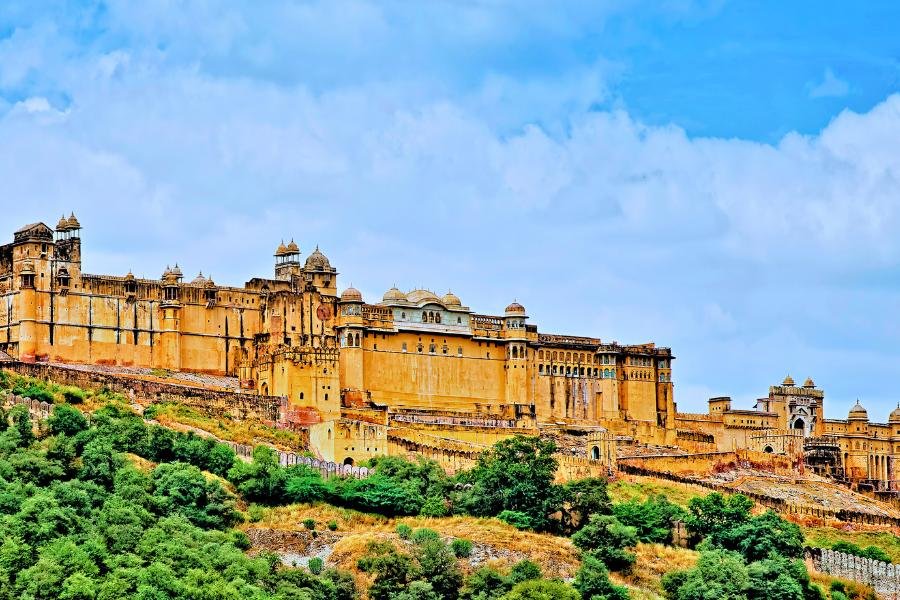
Dedicate your fourth day to Jaipur. Start with Amber Fort, which is one of the city's most spectacular historical attractions. Continue to City Palace and Jantar Mantar, then make time to see the famous Hawa Mahal.
Jaipur is also an excellent destination for shopping. Its markets are known for textiles, jewelry, handicrafts, traditional clothing, decorative items, and other locally produced goods. Rather than spending the entire day moving between attractions, leave some time to walk through the city and enjoy its distinctive atmosphere. Jaipur becomes much more memorable when you combine sightseeing with food, shopping, and everyday local life.
Day 5: Jaipur and Departure
Your final day depends largely on your departure time. If you have an evening flight or train, you can visit an attraction you missed earlier, enjoy breakfast at your hotel, shop for souvenirs, or explore another part of the city. If you are leaving early, keep the morning free and avoid scheduling anything that could make you late.
This flexible final day is another reason five days works well. You are not forced to pack a major sightseeing session into the final few hours. Instead, you can finish the journey at a comfortable pace.
Delhi, Agra or Jaipur: Where Should You Spend More Time?
If you have limited time, deciding where to spend additional hours can be difficult. Delhi has the greatest number of attractions and can easily occupy two days for travelers interested in history, architecture, food, and urban culture. Agra generally requires less time because its principal attractions can be visited efficiently, although travelers who enjoy photography or Mughal history may want an additional night. Jaipur deserves at least one full sightseeing day, and two days is even better if you want to explore beyond the standard attractions.
For a first-time visitor with five days, a useful approach is two days in Delhi, one day in Agra, and two days around Jaipur. This is not a rigid rule, however. If the Taj Mahal is the main reason for your trip, you may prefer to give Agra more attention. If you love architecture and shopping, Jaipur might deserve an extra day. The best itinerary is the one that reflects your interests rather than simply following a standard timetable.
Best Transportation for the Golden Triangle
Transportation can have a major effect on how comfortable your trip feels. A private car with a driver is one of the most flexible options because you can control departure times and make stops along the route. It can be particularly convenient for families and groups carrying luggage. Trains are another popular option, especially when you want to reduce the amount of time spent on the road. Tour packages may combine transportation, accommodation, guides, and sightseeing, which can simplify planning considerably.
If you choose to travel independently, research each journey before booking accommodation and attractions. Try to avoid unrealistic schedules that leave only a small margin between arrival and sightseeing. Travel days should contain some breathing room because delays can happen. A little flexibility can make the difference between a smooth holiday and one where every delay creates a chain reaction.
Best Time to Visit Delhi, Agra and Jaipur
The cooler months are generally more comfortable for sightseeing across the Golden Triangle, particularly when you plan to spend several hours outdoors. Delhi, Agra, and Jaipur can become very hot during the summer, which can make walking around forts and large monuments tiring. The monsoon period can bring rain and higher humidity, although conditions vary and some travelers still enjoy visiting during this season.
Whenever you visit, plan your sightseeing around the weather. During hotter periods, early-morning visits can be much more comfortable than midday exploration. Carry water, wear comfortable footwear, and choose lightweight clothing appropriate for the season. The key is not simply picking a date on the calendar; it is understanding how weather can influence the pace of your day.
How to Make Your Trip More Comfortable
The secret to enjoying the Golden Triangle is not trying to see absolutely everything. Select the attractions that matter most to you and allow enough time to appreciate them. Wear comfortable shoes because sightseeing often involves substantial walking, particularly at large forts and historic complexes. Keep your daily schedule realistic and avoid placing several major attractions at opposite ends of a city on the same afternoon.
Accommodation location also matters. Staying somewhere reasonably close to your main sightseeing areas can save valuable travel time. When selecting hotels, consider cleanliness, guest reviews, breakfast options, transportation access, and the surrounding neighborhood rather than focusing only on the room itself. A convenient hotel can make your mornings and evenings considerably easier.
What Should You Pack?
Pack according to the season, but prioritize comfortable clothing, walking shoes, sunscreen, sunglasses, personal medicines, and a reusable water bottle. A small day bag is useful for sightseeing because you will not want to carry your entire luggage around monuments. Keep important travel documents secure and maintain digital copies where appropriate.
Modest clothing is a sensible choice when visiting religious and cultural sites. Lightweight layers can be useful because temperatures may change during the day, especially during transitional seasons. You should also leave some room in your luggage if you plan to shop in Jaipur or Delhi.
Should You Book a Private Golden Triangle Tour?
A private tour can be especially useful if this is your first visit to India. Having transportation, hotels, sightseeing arrangements, and local guides organized in advance removes many logistical decisions from your holiday. A private itinerary can also be adjusted according to your interests. If you prefer photography, food, history, shopping, or architecture, the schedule can be designed around those priorities rather than following a generic group-tour timetable.
Independent travel can be equally rewarding if you enjoy planning and navigating unfamiliar destinations. The important thing is to understand your own travel personality. If researching hotels, transportation, tickets, and routes sounds exciting, independent travel may suit you. If you would rather concentrate on the experience while someone else handles the logistics, an organized private itinerary may be the better option.
Final Recommendation: How Many Days Are Enough?
So, how many days are enough for a Delhi Agra Jaipur Tour? For most people, the answer is five days and four nights. Three days can work for a quick highlights trip, while four days provides a reasonable but faster experience. Five days gives you the best balance of sightseeing, transportation, relaxation, and flexibility. Six or seven days is ideal when you want a slower holiday or are traveling with family members who may need more rest.
The Golden Triangle deserves more than a checklist approach. Delhi gives you layers of history and modern Indian life, Agra introduces you to extraordinary Mughal architecture, and Jaipur brings the colors and traditions of Rajasthan into the journey. Give yourself enough time to look beyond the famous photographs and experience the food, markets, streets, people, and atmosphere that make these cities memorable. If your schedule allows it, choose five days at minimum and consider extending the trip to six or seven days if you want a more relaxed experience.
Conclusion
A five-day itinerary is the ideal starting point for most travelers visiting Delhi, Agra, and Jaipur. It is long enough to experience the principal attractions while short enough to fit comfortably into a typical vacation. With thoughtful planning, you can explore Delhi, see the Taj Mahal and Agra Fort, travel onward to Jaipur, and discover its magnificent forts and palaces without spending every moment watching the clock.
If you have only three days, focus on the essential sights and accept that the trip will be fast-paced. If you have six or seven days, take advantage of the extra time by exploring local markets, trying regional cuisine, adding cultural experiences, or simply enjoying slower mornings. Ultimately, the best trip length is the one that allows you to return home with great memories rather than exhaustion. For most first-time visitors, five days offers the perfect balance between seeing the highlights and actually enjoying the journey.
FAQs
1. Is 4 days enough for Delhi, Agra and Jaipur?
Yes, four days can be enough if you focus on the main attractions and organize transportation efficiently. You will have limited free time, so the itinerary will be relatively busy. A five-day schedule is preferable if you want a more relaxed experience.
2. How many nights should I stay in Agra?
For most travelers, one night in Agra is sufficient. Staying overnight makes it easier to visit the Taj Mahal early in the morning and then continue toward Jaipur. Travelers with a strong interest in Mughal history or photography may prefer two nights.
3. Can I complete the Golden Triangle in 3 days?
Yes, but a three-day trip is fast-paced. You can visit the major highlights, but you will have little flexibility for delays or leisurely exploration. If possible, extending the trip to four or five days will make the experience significantly more comfortable.
4. Which city deserves the most time: Delhi, Agra or Jaipur?
It depends on your interests. Delhi generally offers the widest range of attractions, while Jaipur is excellent for forts, palaces, shopping, and Rajasthani culture. Agra can usually be covered in less time, although the Taj Mahal and Mughal heritage make it essential for most first-time visitors.
5. What is the best way to travel between Delhi, Agra and Jaipur?
A private car is a convenient option because it offers flexibility and allows stops along the way. Trains can also be useful for selected journeys. Your choice should depend on your budget, preferred comfort level, group size, and how much flexibility you want during the trip.